Neil Gordon, CEO, Global Underwater Hub, highlights the issue of cable failures and explores how the UK could lead in improving performance and reliability.
Globally, over US$800 billion of investment in offshore wind farms is anticipated by 2030 and, for the world to hit net-zero emissions by 2050, the generating capacity from offshore wind must increase by a staggering 1120 GW. In the UK, the government has set ambitious targets of 50 GW of installed capacity by 2030.
Subsea cables are essential components of infrastructure for both fixed and floating offshore wind farms and this scale of expansion in offshore wind can only be achieved by installing and maintaining thousands of miles of reliable underwater cables.
The performance and reliability of subsea cables are therefore paramount not only to developers and the industry, but to the whole country which will increasingly rely on the power that passes through them.
With an extensive installed base of offshore wind capacity and a strong project pipeline, combined with a stable policy framework, there is a significant opportunity for the UK’s underwater supply chain to lead in subsea power cable systems. Indeed, the subsea cable sector for offshore wind has a potential, estimated value of over £100 billion across manufacture and installation over the next 10 years.
Areas to excel
In 2024, the ‘Offshore Wind Industrial Growth Plan’ identified future electrical systems and cables as two of five areas in which the UK should be excelling, as well as offshore installation, operation, and maintenance. To achieve this, the report highlighted the need to triple manufacturing capacity and double research and development.
These areas were chosen because of the size and growth of the domestic and international markets, existing UK capabilities, and its track record of developing solutions to complex technical challenges. Examples include the UK’s deployment of the world’s largest fixed offshore wind farms, coupled with the expertise honed in the oil and gas industry over the last five decades. However, there are major challenges varying from supply chain constraints to cost escalation and cable reliability.
The problem with cable failure
Global Underwater Hub (GUH), the trade and development body which represents the UK’s £9.2 billion underwater industry, has identified cable performance and reliability as a major issue which needs to be solved, especially as floating offshore wind, which requires even more complex dynamic cables, becomes an increasing percentage of the UK’s overall installed base.
Continuous power supply is crucial, and any cable failures can lead to significant disruption to power availability and energy security. Reliable subsea cable systems ensure that the electricity generated offshore is consistently and continuously delivered to the grid.
Failures in subsea power cables also result in prolonged downtime and high repair costs. The economic viability of offshore wind projects is therefore inextricably linked to the reliability of subsea power cables. However, high failure rates and associated repair costs can deter investment.
Unfortunately, failure of these cables is common – to the point where the cost of insuring them is becoming prohibitive. Insurance claims have increased significantly in recent years, with available data pointing to 80% of failures related to the cable system and repairs ranging from £10 million – £40 million, not to mention the costly downtime of at least 40 – 60 days.
Cable insurance
The challenge of insuring cables was laid bare by insurance experts at a recent GUH event, one expert claimed that 85% of the total value of offshore wind claims relate to subsea cables. Most insurers are losing money underwriting cables with the average settlement claim being £9 million. Another broker warned that the high number of cable claims is affecting capacity and coverage, noting that the cost of repairs typically runs into the millions with warranties rarely covering the high cost of business interruption.
According to one developer, the cost of insuring a 1.2 GW offshore wind farm over its lifetime is in the region of £350 million and insurance brokers estimate that the costs of floating offshore wind will be 30% higher than fixed bottom wind farms. If these critical components become uninsurable, offshore wind projects around the world will be derailed, rendering global 2050 net-zero targets unachievable.
With the shift from fixed to floating offshore wind, where the dynamic nature of floating cables is even more challenging, GUH is working to improve the performance and reliability of subsea power cables with a view to developing the UK’s expertise in this field.
GUH is bringing together other trade and standards bodies to explore the reasons for cable failure and to address the lack of standards and guidelines across the lifecycle of offshore wind subsea power cables. Unlike fixed offshore wind, floating offshore wind has few standards and no established supply chains. This means that research into these issues starts with a clean slate and provides the UK with an enormous opportunity to create a new generation of products, services, and standards to meet a domestic market of £270 billion and export market of £1 trillion.
The critical issue of cable reliability, and therefore insurability, must be addressed as a matter of urgency and GUH is taking a holistic approach to finding solutions which can be implemented as floating offshore wind increases in scale and technical capability with higher voltages and dynamic elements. The organisation believes the UK can and should become a global leader in subsea cable technology, particularly with regards to dynamic cables for floating offshore wind.
At the annual GUH-organised subsea cable insurance workshop in October 2024, it became apparent that there are inherent issues affecting the performance and reliability of subsea cables that are within the industry’s control. Failures could stem from any stage in the cable lifecycle – from design to manufacture, handling and installation, through to operation and maintenance.
Identifying potential weak points
Identifying potential weak points along the lifespan of the cable is imperative to ensuring these key components of offshore infrastructure operate robustly and efficiently to bring clean, green renewable energy ashore.
Representatives from government, cable insurers, developers and operators, cable manufacturers, risk management consultancies, and engineering, installation and specialist maintenance companies attended the workshop. Common themes were identified across each stage of the lifespan, as well as concerns which may originate in one stage, but have an impact on another.
These common themes and concerns demonstrated the need – and the desire – for a set of industry led and recognised standards, encompassing the life of the cable that would be adopted by developers, suppliers, contractors, warranty surveyors, and others whilst also being accepted by insurance bodies.
Adoption of a systems-based design methodology is essential as the industry moves into floating offshore wind. The development of clear standards that tackle the system as a whole must be integrated across the supply chain and all phases of the cable lifecycle.
Data sharing is key. There is an urgent need for better information sharing and a move away from a siloed approach that is often secrecy-driven and NDA heavy. This data sharing is one of the main challenges that must be overcome. Introducing shared learning, data logging, and increased transparency will create a more open environment for best practice to be developed. By bringing the industry together, GUH anticipates that this will improve access to the data that is critical to driving long-term improvements and ensuring a focused approach.
It goes without saying that quality control is paramount and that there is a need to focus resources on ‘critical to quality’ parameters that will drive control and improvement. This quest for quality and reliability needs to be driven at the same pace as the drive for efficiency and speed, and considered from both a capital and operational cost perspective.
Risk allocation needs to be addressed as there are challenges around the disproportionate allocation of risk between stakeholders with the need to incentivise failure prediction to reduce insurance claims. With more effective industry collaboration across the entire cable system supply chain, these common themes can be tackled.
Looking to the future
This collaboration must extend to the innovation and manufacturing ecosystem including, but not limited to, universities, catapult centres (high value manufacturing, offshore wind and energy systems), and Renewable UK – the trade association that advocates for the renewable industry in the UK. It must also include governments and governmental organisations so that the supply chain’s experience and expertise can influence, shape, and help deliver clean power and industrial strategies.
Forums, such as GUH’s recently established subsea cables forum, whose members are drawn from companies involved in every stage of the cable lifecycle, will help establish an industry wide approach to best practice and improve the quality, reliability, and therefore insurability, of cables which is paramount to achieving our offshore wind ambitions, particularly in the nascent floating offshore wind arena.
GUH will engage with the industry to ensure that the whole supply chain has a voice and a co-ordinated approach to influence standards and policy, driving reliability, cost-effectiveness, and quality into cables systems supplied in the UK. This will ensure that the UK becomes well-positioned as an authoritative centre for reliable subsea cable systems and solutions that enhance the economic viability of offshore wind projects and help accelerate the development of floating offshore wind.
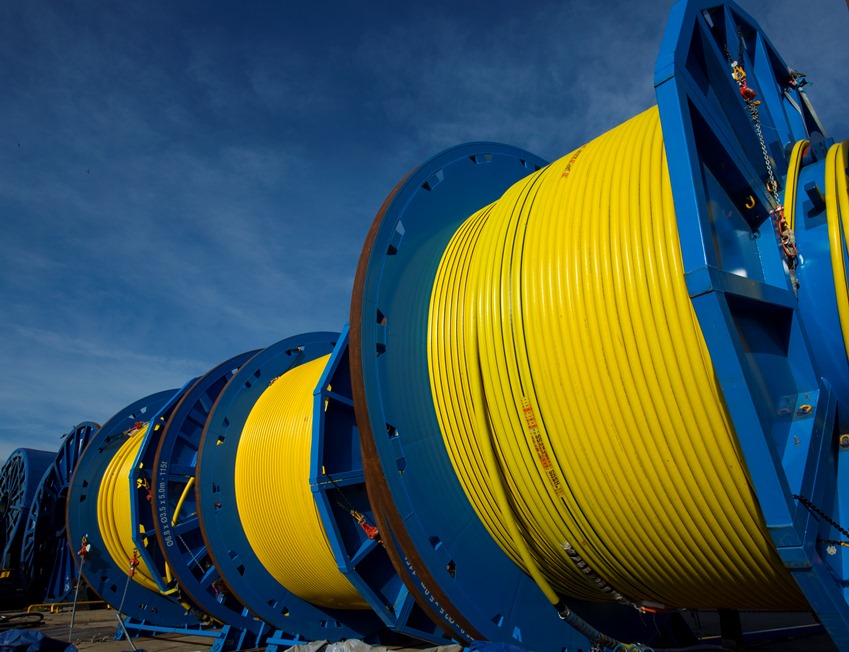
Image courtesy of JDR Cables.